
Plastic Manufacturing Partners Africa — SADC & AfCFTA
Africa's manufacturing sector is at an inflection point. The African Continental Free Trade Area (AfCFTA) — the world's largest free trade area by number of participating countries — is progressively dismantling the tariff barriers that have historically made intra-African trade more expensive than importing from China. For procurement managers in Kenya, Nigeria, Ghana, Tanzania, and across the SADC region, this creates a compelling new calculus: sourcing plastic components from South Africa is increasingly cheaper, faster, and more reliable than sourcing from Asia.
Custom Molding Company is positioned at the centre of this shift. Operating from our Johannesburg facility, we supply injection moulded, vacuum formed, and extruded plastic components to manufacturers and distributors across Sub-Saharan Africa — leveraging South Africa's world-class manufacturing infrastructure, AfCFTA and SADC trade agreements, and the Port of Durban's direct shipping routes to East, West, and Central Africa.
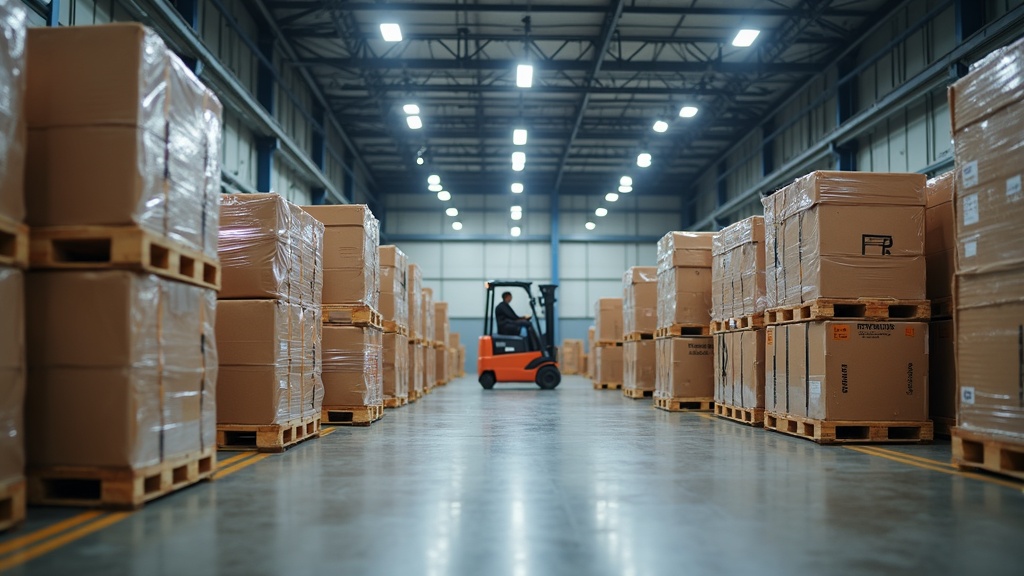
Plastic components prepared for export to Sub-Saharan Africa — Johannesburg, South Africa
The AfCFTA Opportunity: Why African Buyers Are Switching to South African Manufacturing
For decades, the default sourcing model for plastic components across Sub-Saharan Africa was Chinese manufacturing. Low unit costs made Chinese sourcing attractive despite the significant hidden costs: 4–6 week ocean freight lead times, high import duties, minimum order quantities that tied up working capital, and quality inconsistency that was difficult to audit from 12,000 km away.
AfCFTA and the SADC Trade Protocol are changing this equation. As tariff schedules are progressively implemented, the landed cost of plastic components manufactured in South Africa and exported to other African Union member states is declining — in many cases to zero duty under SADC preferences. Combined with dramatically shorter lead times and the ability to conduct in-person factory audits, South African manufacturing is becoming the rational choice for African procurement managers.
South Africa vs. China: The True Landed Cost Comparison for African Buyers
The table below compares the total cost of ownership for plastic components sourced from China versus South Africa for a buyer in Nairobi, Kenya — illustrating why the "cheaper in China" assumption often breaks down when all costs are included.
| Cost Factor | China Sourcing | South Africa (AfCFTA) |
|---|---|---|
| Ocean Freight Lead Time | 4–6 weeks (Shanghai to Mombasa) | 5–7 days (Johannesburg to Nairobi by road/air) |
| Import Duty (Kenya) | 25–35% on plastic goods from China | 0–10% under AfCFTA/COMESA preferences |
| Minimum Order Quantity | High — typically full container loads | Flexible — matched to your demand cycle |
| Working Capital Tied Up | 6–10 weeks of stock in transit | 1–2 weeks of stock in transit |
| Quality Audit Access | Impractical — 12,000 km away | Accessible — 2–4 hour flight from Nairobi |
| Currency Risk | USD/CNY exposure | ZAR — more correlated with African currencies |
| Engineering Communication | 6–8 hour time zone difference; language barrier | Same or adjacent time zone; English-speaking |
SADC Trade Protocol: Zero-Duty Access for Most African Markets
The SADC Trade Protocol has already eliminated import duties on most manufactured goods — including plastic components — traded between its 16 member states. For buyers in Zimbabwe, Zambia, Mozambique, Tanzania, Malawi, Botswana, Namibia, Lesotho, Eswatini, Angola, DRC, Madagascar, Mauritius, and Seychelles, South African plastic components already enter at zero or near-zero duty.
AfCFTA extends this logic to the broader African Union, progressively reducing tariffs for buyers in East Africa (Kenya, Uganda, Rwanda, Ethiopia), West Africa (Nigeria, Ghana, Côte d'Ivoire, Senegal), and North Africa (Egypt, Morocco). As AfCFTA tariff schedules are implemented over the 2025–2035 period, the landed cost advantage of South African manufacturing for African buyers will continue to grow.
African Markets We Serve
| Region | Countries | Trade Framework |
|---|---|---|
| Southern Africa | Zimbabwe, Zambia, Mozambique, Botswana, Namibia, Malawi, Eswatini, Lesotho | SADC — zero duty on most goods |
| East Africa | Kenya, Tanzania, Uganda, Rwanda, Ethiopia | AfCFTA (progressive), COMESA |
| West Africa | Nigeria, Ghana, Côte d'Ivoire, Senegal | AfCFTA (progressive) |
| Central Africa | DRC, Angola, Cameroon | SADC (DRC, Angola), AfCFTA |
| Indian Ocean Islands | Mauritius, Madagascar, Seychelles | SADC — zero duty on most goods |
Industries We Serve Across Africa
- Agriculture & Agri-Processing: Irrigation components, packaging for agricultural inputs, processing equipment parts — serving the backbone of most Sub-Saharan African economies.
- FMCG & Consumer Goods: Packaging, caps and closures, and consumer product housings for brands distributed across African retail networks.
- Healthcare & Pharmaceuticals: Medical device components, pharmaceutical packaging, and laboratory equipment for Africa's growing healthcare sector.
- Construction & Infrastructure: Pipe fittings, cable conduits, window profiles, and structural plastic components for Africa's infrastructure development programmes.
- Telecommunications: Enclosures, cable management, and infrastructure components for Africa's rapidly expanding mobile and fibre networks.
- Automotive & Transport: Replacement parts and components for Africa's vehicle fleet, including both OEM and aftermarket applications.
Why South Africa is Africa's Manufacturing Hub
South Africa's manufacturing sector benefits from infrastructure, skills, and institutional quality that is unmatched elsewhere on the continent. World-class ports (Durban, Cape Town), reliable power and logistics infrastructure, a deep pool of engineering talent, and a well-developed financial system make South Africa the natural manufacturing base for companies serving the African market.
As AfCFTA progressively integrates African markets, the strategic value of a South African manufacturing base — with preferential access to 54 African Union member states — will only increase. Companies that establish their African plastic component supply chain through South Africa now are positioning themselves ahead of this structural shift.
Your African Plastic Manufacturing Partner
Whether you're in Nairobi, Lagos, Accra, or Lusaka — we can supply quality plastic components faster, cheaper, and with less risk than Asian sourcing. Let's talk.
Discuss African Supply ChainCalculate Your Manufacturing Costs
Landed Cost Arbitrage Calculator
Compare standard US/UK manufacturing against our quality-assured South African facility.