
Polycarbonate (PC) Injection Molding
When an application demands extreme impact resistance, optical clarity, and high-temperature stability, Polycarbonate (PC) is the premier engineering thermoplastic. Our global custom molding company specializes in precision Polycarbonate injection molding for safety equipment, automotive lighting, and ruggedized electronics.
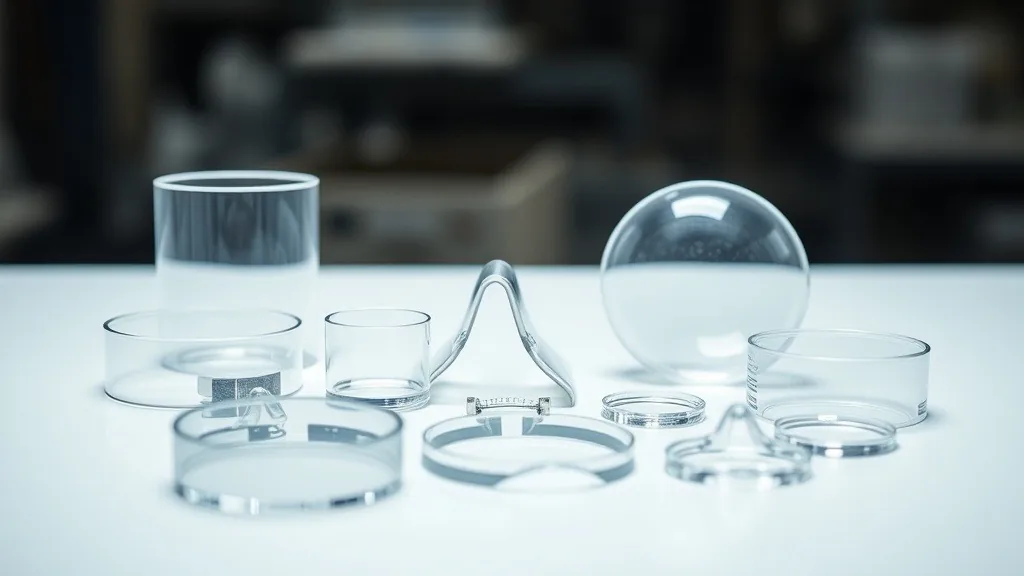
Polycarbonate injection molded optical lenses — Johannesburg, South Africa
Polycarbonate Material Properties (ASTM Standards)
Polycarbonate is an amorphous engineering thermoplastic characterized by its exceptional toughness and transparency. Unlike semi-crystalline polymers, PC maintains its dimensional stability over a wide temperature range. Below are the standard ASTM test values for general-purpose injection molding PC grades.
| Property | Typical PC Value | ASTM Test Standard |
|---|---|---|
| Density / Specific Gravity | 1.20 g/cm³ | ASTM D792 |
| Tensile Strength at Yield | 60–70 MPa | ASTM D638 |
| Flexural Modulus | 2,300–2,400 MPa | ASTM D790 |
| Izod Impact, Notched | 600–850 J/m | ASTM D256 |
| Mold Shrinkage | 0.5–0.7% | ASTM D955 |
| Heat Deflection Temp (HDT) at 1.82 MPa | 130–140°C | ASTM D648 |
| Light Transmission | 88–89% | ASTM D1003 |
The Necessity of Heated Molds for PC
Polycarbonate is a high-viscosity polymer that requires elevated processing temperatures (melt temperatures typically between 280°C and 320°C). When this hot, viscous melt is injected into a cold mold, the outer layer of the polymer solidifies instantly upon contact with the cavity wall, while the core remains molten.
This rapid, uneven cooling creates severe internal molded-in stresses. In Polycarbonate, these stresses manifest as birefringence (rainbow-colored optical distortion under polarized light), flow marks, and a dramatic reduction in impact strength. Furthermore, cold molds restrict the flow of the highly viscous PC, leading to short shots in thin-walled sections.
To mold PC successfully, the tool must be actively heated. Our engineering team specifies hot oil or pressurized water temperature control units (TCUs) to maintain mold surface temperatures between 80°C and 120°C. This elevated mold temperature allows the polymer to flow fully into the cavity, relax internal stresses before freezing, and replicate the mold's surface finish perfectly, which is essential for optical clarity applications.
Moisture Control and Hydrolysis
Polycarbonate is hygroscopic, meaning it absorbs moisture directly from the ambient environment. While the absorbed moisture does not affect the solid part, it is catastrophic during the injection molding process.
If PC is molded with a moisture content above 0.02%, the trapped water turns into superheated steam within the injection barrel. This steam causes a chemical reaction called hydrolysis, which breaks the polymer chains, drastically reducing the material's molecular weight. The visual symptom is "splay" or silver streaking on the part's surface. The invisible, and far more dangerous, symptom is a massive loss of impact strength—a "bulletproof" PC part molded wet can shatter like glass when dropped.
To prevent hydrolysis, our South African facility utilizes desiccant-bed hopper dryers. All Polycarbonate resin is dried at 120°C for 3 to 4 hours immediately prior to molding, ensuring the dew point in the hopper remains below -40°C and the resin moisture content is strictly maintained below the 0.02% threshold.
Polycarbonate vs. ABS: Making the Right Choice
When engineers require a rigid, dimensionally stable housing, the choice often comes down to Polycarbonate or ABS Plastic.
Impact and Heat: Polycarbonate is the clear winner for extreme environments. With an Izod impact strength often double that of ABS and a Heat Deflection Temperature (HDT) nearly 40°C higher, PC is specified for applications that ABS simply cannot survive.
Processability and Cost: ABS is significantly easier to mold. Its lower viscosity allows for easier filling of thin walls and complex geometries without the need for extreme mold temperatures. ABS is also substantially cheaper per kilogram than Polycarbonate.
The Hybrid Solution (PC/ABS): For applications that require the high heat resistance and impact strength of PC, but the easier processability and lower cost of ABS, we frequently mold PC/ABS blends. This alloy is the standard for automotive interior panels and premium consumer electronics enclosures.
Calculate Your Polycarbonate Tooling Margin Improvement
Landed Cost Arbitrage Calculator
Compare standard US/UK manufacturing against our quality-assured South African facility.